Political figures visiting Dartmouth


The Path to the Presidency Runs Through Dartmouth

Dartmouth has a long tradition of hosting events for presidential candidates on the campaign trail, including a debate as recently as the 2012 cycle, giving students a firsthand view of the New Hampshire primary. See Dartmouth-related stories and historic photos from candidate visits to campus.

Campaign News

Networking Events 101

The Path to the Presidency Runs Through Dartmouth

Does the word "networking" make you cringe? Do you find yourself reluctant to go to networking events and meet people?
Here are a few tips to make it easy for you.

  
Set Goals: Networking events can seem exhausting or intimidating, but going into a networking situation with a fun goal can help make the event more manageable and productive. A networking goal can be numerical or qualitative, general or specific and some ideas include:
  • Meet five new people and get their business card or add them to your LinkedIn.
  • Set up at least one follow-up conversation or email.
  • Learn about a different field related to your current interest.

    Entering a Conversation: Instead of waiting for conversation to come to you, be proactive with these simple conversation starters. If you’re nervous, just remember that the majority of other people probably know as few people in the room as you do and will feel relieved if you start the conversation. So set a goal of being the conversation starter for five minutes and use some of these tips:
    • Ask Questions: Everyone likes to talk about themselves. Start by asking about their work, passions, or thoughts on a topic. This is a great way to jump into a new conversation and get to know someone quickly to gather info to build into a conversation. Ex: “Hi, how are you? What kind of work do you do? What are you working on here at Dartmouth?”
    • Location, Location, Location: If you need a quick and easy ice breaker, try asking about the current location or where they came from. For example, "How about this Hanover weather? Where did you fly in from? Have you tried the new Nepalese restaurant in town?"
    • Discuss What You Have in Common: If you are both in the same place at the same time, you must have something in common. Figure out what it is and let it guide your conversation. If it’s a Dartmouth event, talk about Dartmouth.
    • Be Personal: Sharing personal stories and anecdotes will help you stand out and be remembered. Have an elevator pitch ready to make it short and powerful.
    • Allow Others the Chance to Enter Your Conversation: If someone is orbiting your conversation, invite them to join in! This will not only make you fast friends, it will often provide an easy out if you would like to move on.
     
      Body Language: The vast majority of communication takes place non-verbally and your body language can completely define your first interaction with someone.
      • Eye Contact: A must. Don’t stare the person down, but maintaining eye contact can keep both of you engaged.
      • Arms: It’s hard to know where to put your arms! Crossing your arms in front of your body can signal that you are closed to conversation. Hands in pockets signals lack of confidence. Hands on hips can look authoritative. Try holding something in your hand like a drink or plate of refreshments. Talking with hand motions is just fine – it shows energy and enthusiasm. Just be careful not to go overboard and knock someone’s plate or drink.
      • Recognize Disinterest: This is among the master networking skills. Be aware of your audience and know when it’s time to change the subject, let the other person speak, or let them exit the conversation. Telltale signs include eyes glazing over, eagerness to interject, or exit attempts.

      Exiting a Conversation Gracefully: Yet another trait of the master networker. Ending a conversation gracefully is often the most stressful part. People will love you if they do not have to do it. Here are some tips:
      • Food/Friend/Restroom: An easy way to get out of a fading conversation is to excuse yourself for an immediate need. For example, "It was great to talk to you, I’m going to refill my plate (or get another drink)." Or try recognizing the other person’s need – "Can I get you another drink?" Typically by the time you bring the drink back, they have moved on to someone else, and you can pass them their drink with a smile and move on.
      • Follow Up: If you would like to talk to more people at the event but want to stay in touch, just say so. "I have been dying to catch up with ____, can we continue this conversation offline?"
      • Network together! Who says you need to network alone? Suggest to your new acquaintance that you go up to the next group together. "Have you met ____? Come, let me introduce you! They would love to hear about your experience with ____." Be sure to give them something to talk about before you leave.
      Written by

      Office of Communications

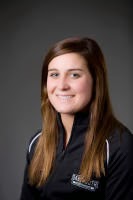
      Caitlin Keenan instrumental in developing the Rockefeller Alumni Mentoring Program

      The Path to the Presidency Runs Through Dartmouth


      For the past year, the Rockefeller Center has been establishing a range of new programs, including a peer mentoring program. Rockefeller's mentoring program is structured in two parts: the Rockefeller Peer Mentoring Program and the Rockefeller Alumni Mentoring Program.

      The Rockefeller Peer Mentoring Program provides the most recent class of First-Year Fellows and Civic Skills Training participants with student mentors pulled from the Rockefeller Leadership Fellows and select upperclassmen who can provide guidance and answer questions that will help sophomores plan the final three years of their Dartmouth experience. 

      On the other end of the spectrum is the Rockefeller Alumni Mentoring Program (RAMP) which matches graduated seniors with recent alumni that graduated from Dartmouth at least 3 to 5 years prior. In its first year of existence, RAMP has matched 13 members of the Class of 2013 with Dartmouth alumni that have graduated on or after 2008 but before 2011. Another 12 alumni mentors have volunteered their services as subject experts and additional resources.

      "The rationale was that alumni were far enough out that they had experiences they could share but were young enough they could relate to someone who had just come from Dartmouth," Caitlin Keenan '12 elaborated.

      Caitlin has been instrumental in establishing RAMP. While on a recruiting trip for her company, Caitlin was discussing with Rockefeller's Deputy Director Sadhana Hall about the difficulties she had experienced while transitioning into the post-graduate world. Based on conversations with other alumni Sadhana had maintained connections with, Sadhana agreed that this was a frequently expressed sentiment. Together, they both developed the concept of an alumni mentoring program which would eventually evolve into RAMP.

      Caitlin credits Dartmouth for doing a lot to ease students during the transition from high school to college. However, she felt there wasn't enough preparation for life after Dartmouth. 

      "I actually wasn't involved with Rocky at all during my time at Dartmouth," Caitlin explained. "I was talking to Sadhana about different groups of students we could target because I knew she was an impactful person on campus. I was casually talking to her about how crazy the transition is from college to real life. It had been really overwhelming and I kind of struggled with it but no one ever really talks about it."

      Everyone who is currently in the pilot version of RAMP expressed interest, but the mentor pairs have varying levels of engagement from being minimally engaged to highly engaged. Caitlin estimates that half the mentoring pairs have established great connections with one another. For now, Caitlin's plan for RAMP is to continue building the program's infrastructure to add personal value by creating opportunities for monthly interactions like Webinars or in-person get-togethers, much of which will occur during the upcoming summer.

      Caitlin is a San Diego native who graduated from Dartmouth with a major in human biology and a minor in environmental studies. In Hanover, Caitlin competed with varsity swim team, volunteered as a DREAM mentor, was selected for Tucker’s CCESP to Nicaragua, and served as social chair for Kappa Kappa Gamma. Her greatest senior year memories were interning at the Tucker Foundation and canoeing from Dartmouth to the Long Island Sound with Ledyard’s Seniors to the Sea. Caitlin currently works as a Management Fellow at Cancer Treatment Centers of America in Chicago. As Caitlin previously indicated, she was never involved with the Rockefeller Center while at Dartmouth, but became a part of the Rockefeller Center family as an alum.

      The Rockefeller Center would like to thank Caitlin for her dedicated work in establishing RAMP.

      Written by

      Office of Communications